A metaphor for hopelessness turns the feeling of having no clear path forward into a concrete image. You might describe hopelessness as a dark tunnel with no visible exit, a…
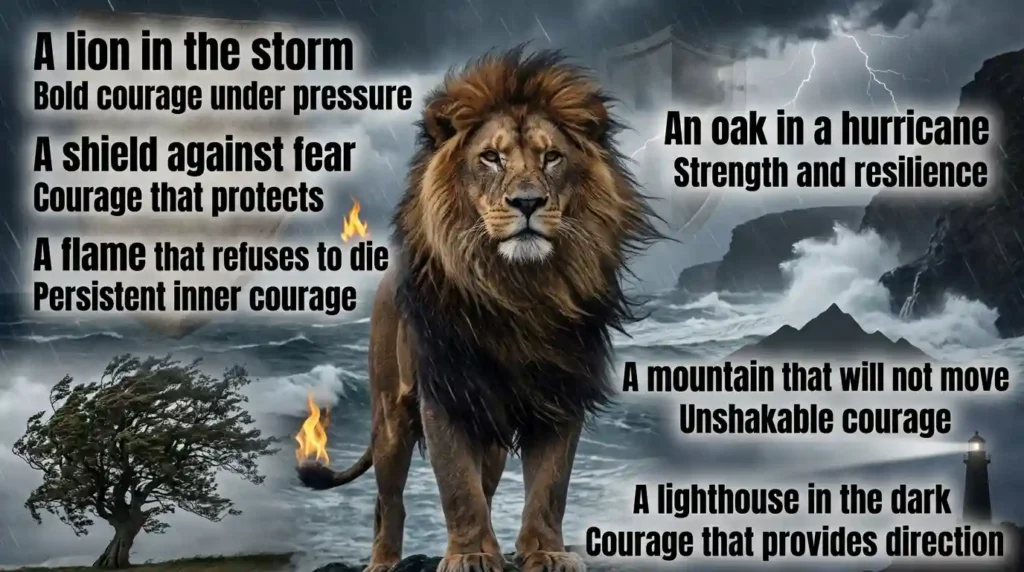
A metaphor for bravery describes courage by turning an abstract quality into a vivid image. Instead of simply saying someone is brave, you might describe that person as a lion,…
A metaphor for short compares someone or something with an image that suggests small size, compactness, limited height, brevity, or quickness. When you describe a short person, metaphors such as…
A metaphor for lonely turns an invisible feeling into something a reader can picture. Instead of simply saying “I feel lonely,” you might describe yourself as an island in a…
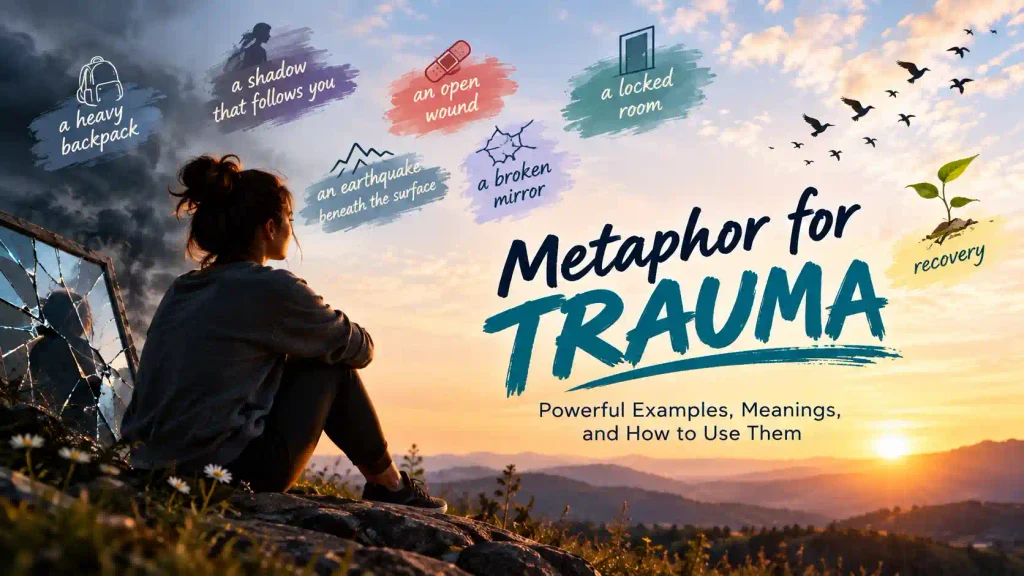
A metaphor for trauma turns an invisible or difficult experience into an image readers can understand. Trauma can be described as an open wound, a shadow, a locked room, a…
A metaphor for intelligence describes a person's mental ability by comparing it to something associated with knowledge, clarity, power, precision, creativity, or insight. Common examples include “a walking encyclopedia,” “a…
A metaphor for failure describes an unsuccessful outcome through a vivid image rather than simply calling it failure. You can portray failure as a dead end, a wrong turn, a…
A metaphor for envy compares the feeling of wanting what someone else has to something more vivid, such as a green fire, a thorn, a shadow, a hungry wolf, or…
A metaphor for hate can turn an intense emotion into a vivid image. Instead of simply saying “I hate him,” you might describe hate as a fire that refuses to…
A metaphor for education compares education with something familiar—such as a journey, garden, bridge, foundation, or compass—to express what learning does and how people experience it. The best metaphor depends…