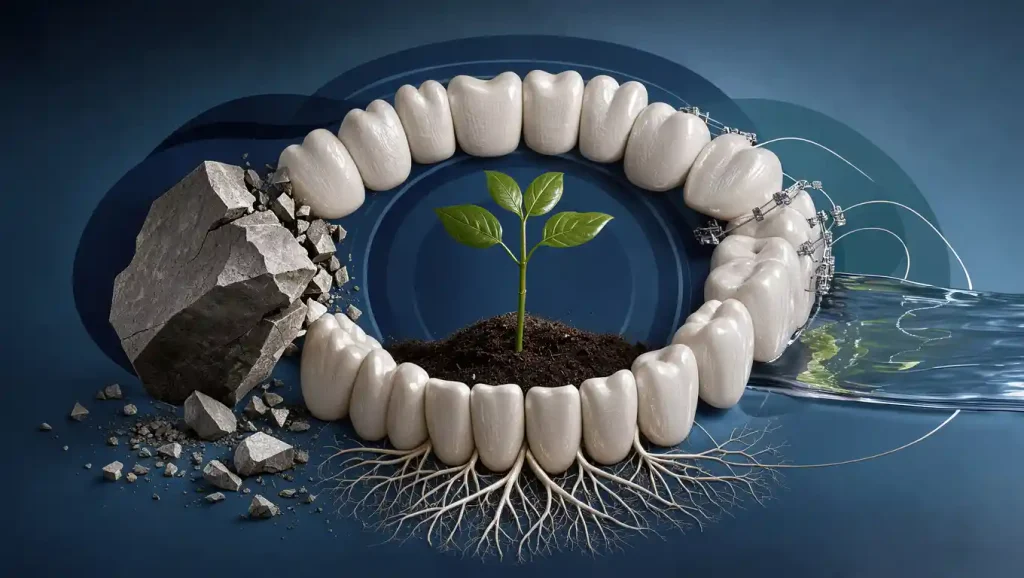
A metaphor for teeth compares teeth to another object, quality, or image to communicate their appearance, strength, sharpness, beauty, or symbolic meaning. Teeth can resemble polished pearls, tiny ivory gates, gleaming diamonds, or even the weapons of a predator. The right comparison depends on the emotion a writer wants to create.
Whether you’re describing a beautiful smile, writing poetry, developing a fictional character, or exploring figurative language, these metaphors offer creative ways to make descriptions more vivid.
Quick Answer: What Is a Metaphor for Teeth?
A metaphor for teeth describes teeth by directly comparing them to something else without using like or as. For example, “Her teeth were a string of pearls” suggests that her teeth were white, smooth, and beautiful. Other possibilities include ivory gates, tiny daggers, shining diamonds, and nature’s little tools.
25 Best Metaphors for Teeth
The following metaphors explore different aspects of teeth, from physical appearance and attractiveness to strength, aggression, and symbolism. They include familiar figurative imagery and original creative comparisons.
Metaphors for Beautiful and White Teeth
These metaphors emphasize brightness, cleanliness, symmetry, and the visual appeal of a smile.
1. Teeth Are a String of Pearls
Meaning: This metaphor compares white, evenly arranged teeth to a beautiful string of pearls. It suggests elegance, cleanliness, and an attractive smile.
Example: Her teeth were a string of pearls, shining whenever she smiled.
Best use: Romantic descriptions, character introductions, and beauty-focused writing.
2. Teeth Are Ivory Keys
Meaning: Teeth resemble the smooth, pale keys of a piano. The image emphasizes their color, shape, and orderly arrangement.
Example: His ivory keys flashed beneath his cheerful smile.
Best use: Literary descriptions and elegant poetry.
3. Teeth Are Tiny Diamonds
Meaning: This metaphor presents teeth as precious stones, suggesting brightness, brilliance, and exceptional beauty.
Example: Her tiny diamonds sparkled beneath the afternoon sunlight.
Best use: Romantic writing, advertisements, and descriptions of dazzling smiles.
4. Teeth Are a Row of White Soldiers
Meaning: This metaphor compares neatly aligned teeth to soldiers standing in formation. It emphasizes straightness, uniformity, and order.
Example: A row of white soldiers stood proudly behind his confident grin.
Best use: Creative descriptions of straight, evenly spaced teeth.
5. Teeth Are Moonlight Trapped in a Smile
Meaning: This poetic metaphor suggests that teeth hold the soft, luminous beauty of moonlight. It creates an impression of gentleness and mystery.
Example: Moonlight seemed trapped in her smile whenever she laughed.
Best use: Romantic poetry, fantasy writing, and lyrical descriptions.
6. Teeth Are Porcelain Tiles
Meaning: This metaphor compares teeth to smooth, pale porcelain tiles arranged in a neat row. It highlights their clean appearance and uniformity.
Example: His porcelain tiles formed a flawless-looking smile.
Best use: Descriptive prose and visual storytelling.
7. Teeth Are Little Beacons of Light
Meaning: Teeth become small sources of brightness that make a person’s smile stand out.
Example: Her little beacons of light transformed the entire room whenever she smiled.
Best use: Positive character descriptions and uplifting writing.
Metaphors for Sharp and Strong Teeth
Teeth are also associated with biting, protection, survival, and physical power. These metaphors are useful when describing animals, threatening characters, or determined personalities.
8. Teeth Are Tiny Daggers
Meaning: This metaphor compares sharp teeth to small blades. It suggests danger, aggression, and the ability to inflict harm.
Example: The wolf’s tiny daggers glistened as it opened its jaws.
Best use: Horror stories, action scenes, animal descriptions, and suspense.
9. Teeth Are Nature’s Weapons
Meaning: Teeth become tools of defense and survival, emphasizing their importance in the natural world.
Example: For the hungry predator, its teeth were nature’s weapons.
Best use: Wildlife writing, nature descriptions, and dramatic storytelling.
10. Teeth Are a Fortress of Strength
Meaning: This metaphor presents teeth as a defensive structure and represents resilience and protection.
Example: His fortress of strength stood firm against years of wear.
Best use: Symbolic writing about endurance, protection, and resilience.
11. Teeth Are Miniature Swords
Meaning: This image describes pointed teeth as small weapons ready for action. It creates a dramatic and combative impression.
Example: The crocodile’s miniature swords appeared as its jaws opened.
Best use: Fantasy fiction, adventure stories, and descriptions of dangerous animals.
12. Teeth Are the Gates of Survival
Meaning: This metaphor presents teeth as essential gateways to eating and survival. It connects their physical function with the broader idea of sustaining life.
Example: For the young lion, its teeth were the gates of survival.
Best use: Nature writing and discussions of animal resilience.
13. Teeth Are a Predator’s Armor
Meaning: Teeth represent a natural defense system that helps an animal protect itself and compete for survival.
Example: The predator’s armor gleamed as it prepared to defend its territory.
Best use: Animal symbolism, action writing, and descriptions of powerful creatures.
Metaphors for Smiling and Happiness
Teeth often become the most noticeable part of a broad smile. These metaphors focus on joy, confidence, warmth, and positive emotions.
14. Teeth Are Sunshine in a Smile
Meaning: This metaphor compares bright teeth to sunshine, making a smile seem warm, cheerful, and welcoming.
Example: Her sunshine-filled smile brightened everyone’s morning.
Best use: Personal essays, positive storytelling, and affectionate descriptions.
15. Teeth Are the Windows of Happiness
Meaning: Teeth are presented as visible signs of someone’s inner happiness. Their appearance reveals the joy behind a smile.
Example: His teeth were the windows of happiness through which his excitement shone.
Best use: Emotional writing and descriptions of joyful characters.
16. Teeth Are the Spark in a Smile
Meaning: This metaphor suggests that teeth provide the brightness and liveliness that make a smile memorable.
Example: Her confidence was unmistakable, and her teeth were the spark in her smile.
Best use: Social media captions, personal descriptions, and creative prose.
17. Teeth Are Little Stars in the Night
Meaning: This metaphor compares bright teeth against a darker background to stars shining in the night sky.
Example: His little stars appeared whenever he laughed in the dimly lit room.
Best use: Poetry, imaginative writing, and nighttime scenes.
18. Teeth Are the White Flags of Joy
Meaning: This metaphor presents a visible smile as a sign of friendliness, openness, and happiness.
Example: Her white flags of joy appeared before she even said hello.
Best use: Warm character descriptions and lighthearted storytelling.
Metaphors for Teeth With Dark or Intimidating Meanings
Not every metaphor for teeth needs to describe beauty. In darker writing, teeth can suggest hostility, fear, concealed intentions, and danger.
19. Teeth Are a Cage of Bone
Meaning: This metaphor describes teeth as a protective enclosure surrounding the tongue and forming part of the mouth’s structure. It can also create an unsettling image of confinement.
Example: His words escaped from a cage of bone and carried a quiet threat.
Best use: Psychological fiction, gothic writing, and unsettling descriptions.
20. Teeth Are the Edges of Anger
Meaning: This metaphor connects visible teeth with aggression and emotional tension, particularly when someone clenches their jaw or bares their teeth.
Example: His clenched teeth were the edges of anger he could no longer hide.
Best use: Conflict scenes, emotional storytelling, and character development.
21. Teeth Are a Wolf’s Warning
Meaning: This metaphor uses exposed teeth as a symbol of hostility, threat, or a warning to stay away.
Example: Her cold expression became a wolf’s warning when the argument escalated.
Best use: Suspense, dramatic dialogue, and descriptions of intimidating behavior.
22. Teeth Are Hidden Blades
Meaning: This metaphor suggests that something seemingly ordinary conceals a dangerous or aggressive side.
Example: Behind his friendly expression, his words were hidden blades.
Best use: Character descriptions, betrayal stories, and psychological suspense.
Original and Creative Metaphors for Teeth
These comparisons offer less conventional imagery for writers who want distinctive descriptions rather than relying entirely on familiar references to pearls and diamonds.
23. Teeth Are a Frozen River of Light
Meaning: This metaphor imagines a row of teeth as a bright, continuous stream of frozen light. It emphasizes whiteness, smoothness, and visual unity.
Example: Her frozen river of light appeared whenever she smiled.
Best use: Poetry, fantasy, and atmospheric descriptions.
24. Teeth Are the Architecture of a Smile
Meaning: This metaphor treats teeth as the structural foundation that gives a smile its visible shape and character.
Example: Her teeth were the architecture of a smile that everyone remembered.
Best use: Essays, character descriptions, and reflective writing.
25. Teeth Are Tiny Sculptures of Nature
Meaning: This metaphor presents teeth as carefully formed natural structures, emphasizing their shape, individuality, and intricate design.
Example: Each tooth was a tiny sculpture of nature, shaped for a purpose.
Best use: Creative nonfiction, educational writing, and nature-inspired poetry.
Comparison Table: Choosing the Best Metaphor for Teeth
| Metaphor | Main meaning | Tone | Best use |
| String of pearls | Beauty and whiteness | Elegant | Romantic writing |
| Ivory keys | Smoothness and order | Refined | Poetry |
| Tiny diamonds | Brightness | Glamorous | Beauty descriptions |
| White soldiers | Alignment | Strong | Character descriptions |
| Moonlight in a smile | Gentle beauty | Dreamy | Romantic poetry |
| Tiny daggers | Sharpness | Threatening | Horror |
| Nature’s weapons | Survival | Powerful | Nature writing |
| Fortress of strength | Protection | Resilient | Symbolism |
| Sunshine in a smile | Happiness | Cheerful | Personal essays |
| Windows of happiness | Emotional expression | Warm | Storytelling |
| Little stars | Brightness | Imaginative | Poetry |
| Cage of bone | Confinement | Dark | Gothic fiction |
| Edges of anger | Aggression | Intense | Conflict scenes |
| Hidden blades | Concealed danger | Mysterious | Suspense |
| Architecture of a smile | Structure and identity | Reflective | Creative nonfiction |
What Do Teeth Symbolize in Literature and Everyday Language?
Teeth can carry several meanings beyond their literal physical function. Their symbolism changes according to the character, situation, and imagery surrounding them.
1. Beauty and Attraction
White, evenly arranged teeth often represent physical attractiveness, personal presentation, and confidence.
Example: Her pearl-like smile became a symbol of elegance and self-assurance.
2. Strength and Power
Sharp or exposed teeth can represent physical power, aggression, and the ability to defend oneself.
Example: The creature’s gleaming teeth symbolized its untamed strength.
3. Confidence and Self-Expression
A smile can communicate happiness, openness, and confidence without requiring words.
Example: His shining teeth became a symbol of the confidence he had finally found.
4. Fear and Vulnerability
Damaged, missing, or exposed teeth can be used in storytelling to suggest insecurity, fear, aging, or vulnerability. These meanings are literary associations, not universal interpretations.
Example: Her broken smile became a symbol of the hardships she had endured.
5. Survival and Instinct
In animal imagery, teeth can represent the ability to hunt, eat, defend, and survive.
Example: The predator’s teeth represented the unforgiving rules of the wild.
6. Communication and Expression
Teeth help shape the mouth’s appearance and can become part of a writer’s imagery for speech, laughter, and emotional expression.
Example: His smile became a language that needed no translation.
Metaphors for Different Types of Teeth
Writers sometimes need to describe a particular type or appearance of teeth rather than teeth in general.
| Type of teeth | Metaphor | Meaning |
| White teeth | A row of pearls | Clean, bright appearance |
| Yellow teeth | Aged ivory | Yellowish, weathered appearance |
| Sharp teeth | Tiny knives | Danger and sharpness |
| Crooked teeth | A winding fence | Irregular alignment |
| Straight teeth | Marching soldiers | Uniformity and order |
| Broken teeth | Cracked porcelain | Damage and fragility |
| Missing teeth | Gaps in a white picket fence | Visible spaces |
| Strong teeth | Iron gates | Durability and strength |
| Small teeth | Little grains of ivory | Delicate appearance |
| Animal teeth | Nature’s blades | Instinct and survival |
| Gold teeth | A golden treasure chest | Luxury and individuality |
| Giant teeth | Ivory pillars | Size and intimidation |
These are creative descriptions, not medical classifications.
More Metaphors for Teeth: Pulling, Giant, White, and Golden Teeth
The appearance and function of teeth offer additional opportunities for figurative language. These expressions are particularly useful when describing difficult situations, exaggerated characters, or distinctive smiles.
Pulling Teeth Metaphor: What Does It Mean?
The expression “like pulling teeth” describes something extremely difficult, frustrating, or unpleasant to accomplish. It compares a challenging task to the discomfort and resistance associated with extracting a tooth.
Although people often search for it as a pulling teeth metaphor, the familiar expression is technically an idiom and a simile because it uses the word like.
Examples:
- Getting him to explain what happened was like pulling teeth.
- Convincing the stubborn child to finish his homework felt like pulling teeth.
- Finding reliable information from the confusing report was like pulling teeth.
Creative metaphor: The conversation was a stubborn tooth refusing to leave its socket.
This original metaphor presents a difficult conversation as something firmly stuck and resistant to change.
Giant Teeth Metaphor: What Do Giant Teeth Symbolize?
A giant teeth metaphor uses unusually large teeth to communicate overwhelming strength, intimidation, aggression, or exaggerated physical appearance. In fantasy and storytelling, enormous teeth can make a creature appear dangerous, powerful, or frightening.
Examples:
- His mouth was a cavern of enormous ivory pillars. This suggests unusually large teeth and an imposing appearance.
- The monster carried mountains of teeth behind its terrible grin. This creates an image of overwhelming danger.
- Her giant teeth were the gates of a powerful smile. This presents an exaggerated but playful image.
Best use: Fantasy stories, horror fiction, children’s stories, and humorous character descriptions.
White Teeth Metaphor: What Do White Teeth Represent?
A white teeth metaphor compares bright, clean-looking teeth to objects associated with purity, brightness, elegance, and beauty.
Popular comparisons include pearls, ivory, porcelain, and diamonds.
- Teeth are polished pearls: Suggests elegance and natural beauty.
- Teeth are ivory keys: Emphasizes smoothness and orderly arrangement.
- Teeth are porcelain tiles: Highlights a clean, uniform appearance.
- Teeth are tiny diamonds: Suggests brilliance and sparkle.
- Teeth are little pieces of moonlight: Creates a gentle, poetic image.
Example: Her white teeth were a necklace of pearls, completing her beautiful smile.
White teeth can also symbolize confidence and self-expression in creative writing, although these are literary associations rather than universal meanings.
Gold Teeth Metaphor: What Do Gold Teeth Symbolize?
A gold teeth metaphor compares golden or gold-covered teeth to precious metal, treasure, wealth, status, individuality, or bold self-expression.
Unlike pearl imagery, which often emphasizes natural-looking beauty, gold teeth can communicate luxury, extravagance, personality, and cultural identity.
Examples:
- His gold teeth were treasures hidden behind a confident grin. This suggests wealth and individuality.
- Her golden smile was a crown of sunlight. This creates a bright, luxurious image.
- His mouth was a jewelry box filled with gold. This emphasizes extravagance and visual impact.
- Those golden teeth were badges of his bold personality. This connects appearance with self-expression.
Golden teeth vs. gold teeth: Both expressions can describe teeth with a golden appearance. Gold teeth can refer to actual dental gold, while golden teeth can also be a poetic description of their color.
Golden Teeth Metaphor Examples
Here are additional original examples for creative writing:
- His golden teeth were little suns inside his smile.
- Her grin was a treasure chest of golden light.
- The rapper’s golden teeth were a crown of confidence.
- His gold-covered smile was a flash of luxury.
- Her golden smile was a sunrise framed by her lips.
These metaphors work particularly well in character descriptions, poetry, music-related writing, and visual storytelling.
Is “By the Skin of My Teeth” a Metaphor?
“By the skin of my teeth” is an established English idiom meaning that someone has barely escaped danger or succeeded in doing something.
Examples:
- I passed the final examination by the skin of my teeth.
- We escaped the storm by the skin of our teeth.
- She caught the train by the skin of her teeth.
Despite its figurative meaning, the expression is best classified as an idiom rather than a conventional metaphor. Its words do not describe an actual layer of skin covering teeth. Instead, the complete expression communicates a narrow escape or extremely close success.
Metaphorical interpretation: The phrase creates an image of someone surviving a difficult situation by the smallest possible margin.
It is an effective example of how everyday English uses body-related expressions to communicate ideas that go beyond their literal meanings.
“She Had Horses Who Were Fur and Teeth”: Meaning of the Metaphor
The phrase “She had horses who were fur and teeth” is associated with Joy Harjo’s poem She Had Some Horses, published in her 1983 collection of the same name.
It is not a metaphor about human teeth. Instead, it describes horses through their physical and elemental qualities.
- Fur: Suggests their physical bodies, natural appearance, and animal identity.
- Teeth: Suggests their instinctive, physical, and potentially fierce nature.
Together, the image presents horses as living creatures with both recognizable physical qualities and an untamed animal presence.
The wider poem repeatedly transforms horses into images of landscapes, natural elements, emotions, and human experiences. The horses can therefore be read as carrying different aspects of identity and experience rather than simply representing ordinary animals.
Why is this a metaphor?
The phrase identifies the horses with fur and teeth rather than merely saying that they have fur and teeth. It uses figurative identification to create a vivid image.
Example of a similar original metaphor: The creature was a storm of fur and teeth, moving through the darkness.
This comparison uses animal features to communicate wildness and danger.
Metaphor vs. Simile for Teeth
Metaphors and similes both create comparisons, but they express those comparisons differently.
A metaphor directly identifies one thing with another, while a simile explicitly compares two things using words such as “like” or “as.”
| Type | Example | Explanation |
| Metaphor | Her teeth were pearls. | Directly identifies teeth with pearls. |
| Simile | Her teeth were like pearls. | Explicitly compares teeth to pearls. |
| Metaphor | His teeth were tiny daggers. | Suggests sharpness and danger. |
| Simile | His teeth were as sharp as daggers. | Uses an explicit comparison. |
| Metaphor | Her smile was sunshine. | Presents the smile as a source of happiness. |
| Simile | Her smile was like sunshine. | Compares the smile to sunshine. |
Which Is Better for Creative Writing?
Use metaphors when you want a stronger, more immediate image. Use similes when you want to make a comparison especially clear or accessible.
For example:
- Metaphor: Her smile was a necklace of pearls.
- Simile: Her teeth shone like a necklace of pearls.
Both are effective, but the metaphor creates a more direct imaginative connection.
Teeth-Related Idioms and Figurative Expressions
Not every figurative expression involving teeth is technically a metaphor. Some are idioms whose meanings differ from their literal words.
| Expression | Meaning | Example |
| Armed to the teeth | Fully equipped or heavily armed | The guards were armed to the teeth. |
| Sink your teeth into something | Become deeply involved in a task | She was ready to sink her teeth into the project. |
| Fight tooth and nail | Fight with great determination | They fought tooth and nail to protect their home. |
| By the skin of your teeth | Barely succeed or escape | He passed the examination by the skin of his teeth. |
| Cut your teeth on something | Gain early experience | She cut her teeth on small writing projects. |
| In the teeth of adversity | Despite strong opposition or difficulty | They continued in the teeth of adversity. |
| Cast something in someone’s teeth | Remind someone of something in an insulting or reproachful way | He cast her earlier mistake in her teeth. |
| Get your teeth into something | Become enthusiastically involved in something | The writer finally had a mystery to get her teeth into. |
These expressions show how teeth have become part of everyday figurative language.
Frequently Asked Questions About Metaphors for Teeth
1. What Is a Good Metaphor for Teeth?
A good metaphor for teeth is “a string of pearls.” It compares teeth to beautiful white pearls, suggesting brightness, smoothness, and an attractive smile. Other effective options include tiny diamonds, ivory keys, and little stars.
2. What Are Teeth a Metaphor For?
Teeth can represent beauty, confidence, strength, aggression, protection, survival, and vulnerability. Their meaning depends on the context. For example, pearl-like teeth suggest beauty, while a predator’s dagger-like teeth suggest danger and power.
3. What Is a Metaphor for White Teeth?
“Her teeth were a row of pearls” is a popular figurative description of white teeth. Other creative options include ivory keys, tiny diamonds, polished porcelain, and stars in a smile.
4. What Is a Metaphor for Sharp Teeth?
“His teeth were tiny daggers” is an effective metaphor for sharp teeth. It creates an image of pointed blades and suggests danger, aggression, or the ability to cause harm.
5. What Is a Metaphor for a Beautiful Smile?
“Her smile was a sunrise” is a beautiful metaphor for a warm and attractive smile. Other options include a necklace of pearls, sunshine in a smile, and moonlight trapped in a smile.
6. What Is the Difference Between a Metaphor and a Simile for Teeth?
A metaphor directly compares teeth to something else, such as “Her teeth were pearls.” A simile uses like or as, such as “Her teeth were like pearls.” Both create imagery, but a metaphor makes a more direct comparison.
Conclusion
A metaphor for teeth can describe much more than their color or appearance. Teeth can become pearls that represent beauty, daggers that communicate danger, fortresses that suggest strength, or stars that brighten a smile.
The most effective comparison depends on the emotion and image you want to communicate. For elegant descriptions, choose pearls or ivory. For dramatic writing, explore blades and weapons. For warm, positive imagery, use sunshine and stars.
By choosing a metaphor that matches your intended meaning, you can turn an ordinary description of teeth into a memorable piece of writing.

Qaiser Abbas is an award-winning author, leadership coach, and motivational speaker known for his work on personal growth, leadership, and human potential. Through his writing and speaking, Qaiser focuses on turning challenges into opportunities and helping people build the mindset to achieve meaningful growth.